Submit a Review & Earn an Amazon Gift Card
You can now submit reviews for your favorite Tocris products. Your review will help other researchers decide on the best products for their research. Why not submit a review today?!
Submit Review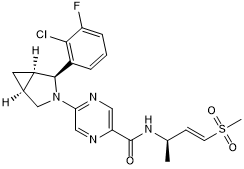
VVD 844 is a potent inhibitor of the PI3K/p110α interaction (IC50 = 4 nM) and the phosphorylated-Ser473-AKT (pAKT) pathway (IC50 = 11 nM). It covalently binds cysteine 242 in the RAS domain of PI3K/p110α and blocks RAS activation of PI3Kα activity in vitro.
In vivo, VVD 844 slows growth of RAS mutant tumors and human epidermal growth factor receptor 2 (HER2)-overexpressing tumors, without causing hyperglycemia. Exhibits synergistic effects with Sotorasib (Cat. No. 7713) and Adagrasib (Cat. No. 7488). VVD 844 is orally bioavailable.
Sold with permission from Vividion Therapeutics
| M. Wt | 464.94 |
| Formula | C21H22ClFN4O3S |
| Storage | Store at -20°C |
| Purity | ≥98% (HPLC) |
| CAS Number | 3080226-63-4 |
| PubChem ID | 176259150 |
| InChI Key | WLYRECBTSICUGW-DATNFHAOSA-N |
| Smiles | ClC1=C(C=CC=C1F)[C@@H]2[C@@]3([H])[C@](CN2C4=NC=C(C(N[C@H](C)/C=C/S(C)(=O)=O)=O)N=C4)([H])C3 |
The technical data provided above is for guidance only. For batch specific data refer to the Certificate of Analysis.
Tocris products are intended for laboratory research use only, unless stated otherwise.
| Solvent | Max Conc. mg/mL | Max Conc. mM | |
|---|---|---|---|
| Solubility | |||
| DMSO | 46.49 | 100 | |
| ethanol | 46.49 | 100 |
The following data is based on the product molecular weight 464.94. Batch specific molecular weights may vary from batch to batch due to the degree of hydration, which will affect the solvent volumes required to prepare stock solutions.
| Concentration / Solvent Volume / Mass | 1 mg | 5 mg | 10 mg |
|---|---|---|---|
| 1 mM | 2.15 mL | 10.75 mL | 21.51 mL |
| 5 mM | 0.43 mL | 2.15 mL | 4.3 mL |
| 10 mM | 0.22 mL | 1.08 mL | 2.15 mL |
| 50 mM | 0.04 mL | 0.22 mL | 0.43 mL |
References are publications that support the biological activity of the product.
Klebba et al (2025) Covalent inhibitors of the PI3Kα RAS binding domain impair tumor growth driven by RAS and HER2. Science 390 702 PMID: 41066541
If you know of a relevant reference for VVD 844, please let us know.
Keywords: VVD 844, VVD 844 supplier, VVD844, potent, covalent, inhibitor, inhibits, binds, blocks, RAS, domain, PI3K, PI3K/p110α, p110-alpha, p110a, interaction, mutant, tumors, human, epidermal, growth, factor, receptor, 2, HER2, overexpressing, sotorasib, adagrasib, orally, bioavailable, in, vivo, Ras, GTPases, 8952, Tocris Bioscience
Citations are publications that use Tocris products.
Currently there are no citations for VVD 844. Do you know of a great paper that uses VVD 844 from Tocris? Please let us know.
There are currently no reviews for this product. Be the first to review VVD 844 and earn rewards!
$25/€18/£15/$25CAN/¥75 Yuan/¥2500 Yen for a review with an image
$10/€7/£6/$10 CAD/¥70 Yuan/¥1110 Yen for a review without an image
Tocris offers the following scientific literature in this area to showcase our products. We invite you to request* your copy today!
*Please note that Tocris will only send literature to established scientific business / institute addresses.

This product guide reviews some of the main areas in cancer metabolism research and lists around 150 products that can be used to investigate metabolic pathways in cancer including:

Written by Kirsten L. Bryant, Adrienne D. Cox and Channing J. Der, this review provides a comprehensive overview of RAS protein function and RAS mutations in cancer. Key signaling pathways are highlighted and therapeutic vulnerabilities are explored. This review also includes a detailed section on RAS drug discovery and targeting synthetic lethal interactors of mutant RAS. Compounds available from Tocris are listed.

In normal cells, each stage of the cell cycle is tightly regulated, however in cancer cells many genes and proteins that are involved in the regulation of the cell cycle are mutated or over expressed. This poster summarizes the stages of the cell cycle and DNA repair. It also highlights strategies for enhancing replicative stress in cancer cells to force mitotic catastrophe and cell death.

This poster summarizes the main epigenetic targets in cancer. The dysregulation of epigenetic modifications has been shown to result in oncogenesis and cancer progression. Unlike genetic mutations, epigenetic alterations are considered to be reversible and thus make promising therapeutic targets.



Our product guide reviews some of the main areas in cancer metabolism research and highlights products that can be used to explore metabolic pathways.
Request copyRequest PDF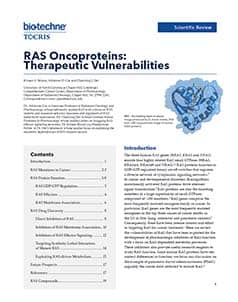
Our review provides a thorough overview of RAS protein function and RAS mutations in cancer. Key signaling pathways are highlighted and therapeutics vulnerabilities are explored with a detailed section on RAS drug discovery.
Request copyRequest PDF
Our Cell Cycle & DNA Damage Repair poster summarizes the stages of the cell cycle and DNA repair. It also highlights strategies for enhancing replicative stress in cancer cells to force mitotic catastrophe and cell death.
Request copyDownload PDF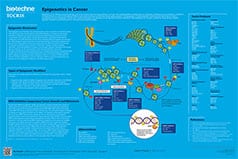
Our Epigenetics in Cancer poster summarizes the main epigenetic targets in cancer, and highlights chemical compounds for the inhibition of these targets.
Request copyDownload PDF
You can now submit reviews for your favorite Tocris products. Your review will help other researchers decide on the best products for their research. Why not submit a review today?!
Submit Review