Submit a Review & Earn an Amazon Gift Card
You can now submit reviews for your favorite Tocris products. Your review will help other researchers decide on the best products for their research. Why not submit a review today?!
Submit Review
Geldanamycin is a selectively inhibits heat shock protein 90 (Hsp90). Binds to the ATP site of Hsp90 (Kd = 1.2 μM) and inhibits its chaperone activity. Consequently inhibits activities of oncogenic kinases (e.g. src, Raf), p53 and steroid receptors. Demonstrates antiproliferative effect on breast cancer stem-like cells.
| M. Wt | 560.64 |
| Formula | C29H40N2O9 |
| Storage | Desiccate at -20°C |
| Purity | ≥98% (HPLC) |
| CAS Number | 30562-34-6 |
| PubChem ID | 13017912 |
| InChI Key | QTQAWLPCGQOSGP-PHLMVCJGSA-N |
| Smiles | O=C1C(OC)=C(C[C@@H](C)C[C@H](OC)[C@H](O)[C@@H](C)/C=C(C)/[C@H](OC(N)=O)[C@@H](OC)/C=C/C=C(C)/C2=O)C(C(N2)=C1)=O |
The technical data provided above is for guidance only. For batch specific data refer to the Certificate of Analysis.
Tocris products are intended for laboratory research use only, unless stated otherwise.
References are publications that support the biological activity of the product.
Cardenas et al (1998) Signal-transduction cascades as targets for therapeutic intervention by natural products. Trends Biotechnol. 16 427 PMID: 9807840
Roe et al (1999) Structural basis for inhibition of the Hsp90 molecular chaperone by the antitumor antibiotics radicicol and geldanomycin. J.Med.Chem. 42 260 PMID: 9925731
Whitesell et al (1994) Inhibition of heat shock protein HSP90-pp60v-src heteroprotein complex formation by benzoquinone ansamycins: essential role for stress proteins in oncogenic transformation. Proc.Natl.Acad.Sci.U.S.A. 91 8324 PMID: 8078881
Lee et al (2012) Inhibition of heat shock protein (Hsp) 27 potentiates the suppressive effect of Hsp90 inhibitors in targeting breast cancer stem-like cells. Biochimie. 94 1382 PMID: 22445681
Keywords: Geldanamycin, Geldanamycin supplier, Selective, Hsp90, inhibitors, inhibits, Heat, Shock, Protein, 90, antibiotics, Antibiotics, Stem, Cell, Signaling, Cancer, Cells, 1368, Tocris Bioscience
Citations are publications that use Tocris products. Selected citations for Geldanamycin include:
Young et al (2015) A novel mechanism of autophagic cell death in dystrophic muscle regulated by P2RX7 receptor large-pore formation and HSP90. BMC Dev Biol 11 113 PMID: 25700737
Chung-Davidson et al (2015) Hsp90 and hepatobiliary transformation during sea lamprey metamorphosis. Nucleic Acids Res 15 47 PMID: 26627605
Yang et al (2018) NudCL2 is an Hsp90 cochaperone to regulate sister chromatid cohesion by stabilizing cohesin subunits. Cell Mol Life Sci PMID: 30368549
Khalafalla et al (2017) P2X7 receptor antagonism prevents IL-1β release from salivary epithelial cells and reduces inflammation in a mouse model of autoimmune exocrinopathy. J Biol Chem 292 16626 PMID: 28798231
Barker et al (2006) Inhibition of Hsp90 acts synergistically with topoisomerase II poisons to increase the apoptotic killing of cells due to an increase in topoisomerase II mediated DNA damage. Neuroscience 34 1148 PMID: 16504968
Average Rating: 5 (Based on 2 Reviews.)
$25/€18/£15/$25CAN/¥75 Yuan/¥2500 Yen for a review with an image
$10/€7/£6/$10 CAD/¥70 Yuan/¥1110 Yen for a review without an image
Filter by:
The drug was incubated at 10 μM to inhibit Hsp90.
Geldanamycin was used in resistance experiments. We investigated the Hsp90 family protein (HtpG) of the organism that makes GdA, S. hygroscopicus.

Tocris offers the following scientific literature in this area to showcase our products. We invite you to request* your copy today!
*Please note that Tocris will only send literature to established scientific business / institute addresses.

This product guide provides a review of the cell cycle and DNA damage research area and lists over 150 products, including research tools for:

Parkinson's disease (PD) causes chronic disability and is the second most common neurodegenerative condition. This poster outlines the neurobiology of the disease, as well as highlighting current therapeutic treatments for symptomatic PD, and emerging therapeutic strategies to delay PD onset and progression.

Our GMP stem cell compounds are suitable for use as ancillary reagents (raw materials) for the further manufacturing of stem cell therapies.
Learn More
Our Cell Cycle and DNA Damage Research Guide highlights over 750 products for cell cycle and DNA damage research.
Request copyRequest PDF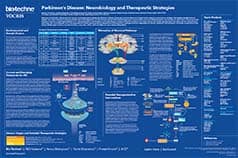
Our Parkinson's disease (PD) poster summarizes the neurobiology of the disease, and highlights current therapeutic treatments for symptomatic PD.
Request copyDownload PDF
You can now submit reviews for your favorite Tocris products. Your review will help other researchers decide on the best products for their research. Why not submit a review today?!
Submit Review