Submit a Review & Earn an Amazon Gift Card
You can now submit reviews for your favorite Tocris products. Your review will help other researchers decide on the best products for their research. Why not submit a review today?!
Submit Review
SW 033291 is a high affinity 15-hydroxyprostaglandin dehydrogenase (15-PGDH) inhibitor (Ki = 0.1 nM). Increases PGE2 levels in A549 cells in vitro, as well as in bone marrow, colon, lung and liver in mice. Promotes hematopoiesis, recovery from DSS-induced colitis, and hepatocyte proliferation after partial hepatectomy in mice.
SW 033291 is also offered as part of the Tocriscreen 2.0 Max and Tocriscreen Stem Cell Library. 了解 Tocris 化合物库的更多信息。
| 分子量 | 412.59 |
| 公式 | C21H20N2OS3 |
| 储存 | Store at -20°C |
| 纯度 | ≥98% (HPLC) |
| CAS Number | 459147-39-8 |
| PubChem ID | 3337839 |
| InChI Key | LCYAYKSMOVLVRL-UHFFFAOYSA-N |
| Smiles | NC1=C(S(CCCC)=O)SC2=NC(C3=CC=CS3)=CC(C4=CC=CC=C4)=C21 |
上方提供的技术数据仅供参考。批次相关数据请参见分析证书。
Tocris products are intended for laboratory research use only, unless stated otherwise.
参考文献是支持产品生物活性的出版物。
Zhang et al (2015) Inhibition of the prostaglandin-degrading enzyme 15-PGDH potentiates tissue regeneration. Science 345 aaa2340 PMID: 26068857
关键词: SW 033291, SW 033291 supplier, SW033291, 15-PGDH, hydroxyprostaglandin, dehydrogenase, inhibitors, inhibits, hematopoiesis, hematopoietic, hepatocyte, proliferation, PGE2, haematopoietic, stem, cells, HSC, Other, Dehydrogenases, Stem, Cell, Proliferation, Hematopoietic, Cells, 5759, Tocris Bioscience
目前没有该产品的评论。 Be the first to review SW 033291 and earn rewards!
$25/€18/£15/$25CAN/¥75 Yuan/¥2500 Yen for a review with an image
$10/€7/£6/$10 CAD/¥70 Yuan/¥1110 Yen for a review without an image
Tocris offers the following scientific literature in this area to showcase our products. We invite you to request* your copy today!
*请注意,Tocris 仅会向正规科研企业/机构地址发送文献。

This product guide reviews some of the main areas in cancer metabolism research and lists around 150 products that can be used to investigate metabolic pathways in cancer including:

This poster summarizes the main metabolic pathways in cancer cells and highlights potential targets for cancer therapeutics. Genetic changes and epigenetic modifications in cancer cells alter the regulation of cellular metabolic pathways providing potential cancer therapeutic targets.

Our GMP stem cell compounds are suitable for use as ancillary reagents (raw materials) for the further manufacturing of stem cell therapies.
Learn More
Our product guide reviews some of the main areas in cancer metabolism research and highlights products that can be used to explore metabolic pathways.
Request copyRequest PDF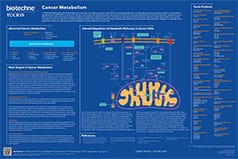
Our Cancer Metabolism poster summarizes the main metabolic pathways in cancer cells, and highlights potential targets for cancer therapeutics.
Request copyDownload PDF
You can now submit reviews for your favorite Tocris products. Your review will help other researchers decide on the best products for their research. Why not submit a review today?!
Submit Review