Angiogenesis
Angiogenesis (also known as neovascularization) is the generation of new blood vessels from pre-existing vasculature. It is a normal process in growth and development and is required for the formation of arteries, veins, and capillaries in an embryo.
Angiogenesis Target Files
Countering Angiogenesis
Angiogenesis has become an important target for cancer research with the recognition that it is one of the critical events necessary for cancer growth and metastasis. As a tumor develops, its size is limited by the diffusion of metabolites from existing blood vessels. Tumor angiogenesis, the growth of the new blood vessels, is essential for cancerous tumors to keep growing and spreading.
As a tumor grows, cells at the center become starved of oxygen, inducing the expression of a transcription factor - hypoxia inducible factor-1 (HIF-1) - which upregulates the expression of a range of angiogenic factors. Growth factor signaling also initiates HIF-1 activity, pre-empting the need for growing cells to maintain oxygen homeostasis. As a result, HIF-1 itself has been isolated as a therapeutic target for cancer. More than a dozen different proteins, as well as several smaller molecules, have been identified as angiogenic meaning that they are released by tumors as signals for angiogenesis. Inhibitors of angiogenesis (antiangiogenics) are currently the focus of intense cancer research.
The hypoxic environment of arthritic joints also encourages angiogenesis, which in turn generates new blood vessels to supply the expanded synovial tissue with nutrients.
Promoting Angiogenesis
As well as its detrimental effects in tumor growth and inflammatory disorders, the generation of new blood vessels is a vital process in the context of stroke, cardiovascular disease and diabetes. Many of the pathologies associated with diabetes, such diabetic neuropathy, reduced wound healing and diabetic ulcers, are caused by a reduced blood supply to the downstream tissue. Therefore, promoting angiogenesis in diabetic patients may represent an important strategy in reducing morbidity. Recent work using adenovirus-mediated transfer of VEGF165 showed that promoting angiogenesis significantly accelerated wound healing.
Promoting angiogenesis may also be beneficial in the treatment of myocardial ischemia and peripheral vascular disease. Increasing perfusion of downstream ischemic tissues using cytokines such as vascular endothelial growth factor (VEGF) and fibroblast growth factor (FGF) has demonstrated beneficial effects in several animal models, yet the results of clinical trials to date have been disappointing. This may be related to comorbidities such as endothelial dysfunction or atherosclerosis that may blunt the proangiogenic effects of such interventions. Despite these potentially confounding effects, further research into promoting angiogenesis in patients with cardiovascular disease or diabetes may uncover novel and effective therapeutic strategies.
Tumor Vascularization
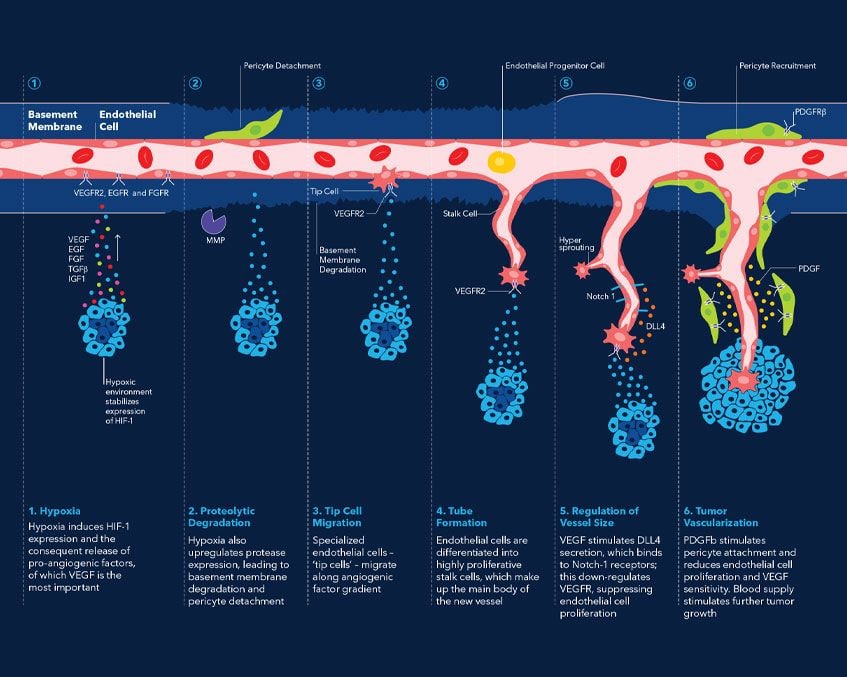
Figure showing angiogenesis steps in tumor vascularization.
Taken from the Angiogenesis in Cancer Guide Edition 1, 2024. Request or download your copy today!
Literature for Angiogenesis
Tocris offers the following scientific literature for Angiogenesis to showcase our products. We invite you to request* your copy today!
*Please note that Tocris will only send literature to established scientific business / institute addresses.

Angiogenesis in Cancer Research Product Guide
This product guide provides background information on angiogenesis in cancer and lists around 150 products for the study of the main angiogenesis therapeutic targets including:
- Growth Factors
- Transcription Factors
- Adhesion, Extracellular Matrix Remodeling
- Key Signaling Pathways

Angiogenesis in Cancer Poster
This poster summarizes the pathogenesis of angiogenesis in cancer, as well as some of the main angiogenesis therapeutic targets.

This guide provides background information on angiogenesis in cancer, and highlights products that can be used for the main angiogenesis therapeutic targets.
Request copyRequest PDF
Our Angiogenesis in Cancer poster summarizes the pathogenesis of angiogenesis in cancer, as well as some of the main angiogenesis therapeutic targets.
Request copyDownload PDF