Depression Research
Major depressive disorder, often referred to as major depression, is a heterogenous condition with complex and diverse neurobiological etiologies. Depression is characterized by a triad of symptoms: low or depressed mood, anhedonia and low energy or fatigue. Approximately 15% of the population in developed countries has been affected by depression in their lifetime and the chance of developing depression is twice as high in women. 40-50% of depressive causes are inheritable (genes as yet unidentified) and the remaining 50-60% of causes are caused by environmental stressors.
Depression Research Product Areas
Pathogenesis of Depression
Traditionally, depression has been described as a disease of decreased monoamine function within the brain (also known as the monoamine hypothesis). Brain areas specifically involved are thought to include the hippocampus, prefrontal and cingulate cortex, and the amygdala. In addition the dopaminergic reward pathway, in particular the nucleus accumbens, and the hypothalamus may also be involved, and have been identified due to the symptoms of anhedonia, and abnormalities in sleep, appetite and circadian rhythms respectively, which are prevalent in depressed patients.
Depression may also be caused by an enhancement of biological stress-response mechanisms, especially the hypothalamic-pituitary-adrenal (HPA) axis, is a common feature of depression, which is manifested by increased corticotrophin releasing factor (CRF) expression in the hypothalamus and cerebrospinal fluid (CSF).
Pharmacological Intervention
The main obstacle for depression research has been the lack of animal models for some depressive symptoms, such as guilt and suicidal ideology. This has hampered efforts to fully understand the disease and it remains an area of intense research.
Current pharmacological interventions for depression focus on potentiation of the monoamine system. Tricyclic antidepressants act by inhibiting serotonin and/or noradrenalin uptake and monoamine oxidase (MAO) inhibitors reduce the enzymatic breakdown of serotonin, noradrenalin and dopamine. Novel pharmacological targets focusing on non-monoamine systems, such as CRF antagonists, GR antagonists, cytokines, melatonin receptor agonists, TrkB agonists, histone deacetylase (HDAC) inhibitors and κ-opioid receptor antagonists, are currently being developed.
Literature for Depression Research
Tocris offers the following scientific literature for Depression Research to showcase our products. We invite you to request* or download your copy today!
*Please note that Tocris will only send literature to established scientific business / institute addresses.

Dopamine Receptors Scientific Review
Written by Phillip Strange and revised by Kim Neve in 2013, this review summarizes the history of the dopamine receptors and provides an overview of individual receptor subtype properties, their distribution and identifies ligands which act at each receptor subtype. Compounds available from Tocris are listed.

Metabotropic Glutamate Receptors Scientific Review
Written by Francine Acher, this review discusses the pharmacology and therapeutic potential of mGlu receptors, and the compounds acting upon them; compounds available from Tocris are listed.

Depression Poster
Major depressive disorder is characterized by depressed mood and a loss of interest and/or pleasure. Updated in 2015 this poster highlights presynaptic and postsynaptic targets for the potential treatment of major depressive disorder, as well as outlining the pharmacology of currently approved antidepressant drugs.
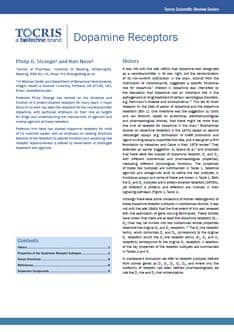
Our Dopamine receptors review gives an overview of the dopamine receptor subtypes, and the receptor agonists and antagonists used to study them.
Request copyRequest PDF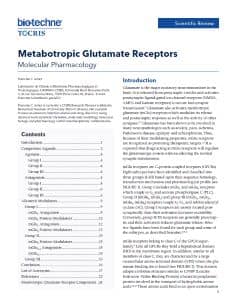
Our Metabotropic Glutamate Receptor review gives an overview of the pharmacological ligands used to study the mGlu receptors.
Request copyRequest PDFWritten by P. Skolnich et al

Our Depression poster highlights presynaptic and postsynaptic targets for the potential treatment of major depressive disorder.
Request copyDownload PDF