Cholecystokinin Receptors
Cholecystokinin (CCK) is a neuropeptide and gut hormone that regulates pancreatic enzyme secretion and gastrointestinal motility, and acts as a satiety signal. It is released simultaneously from intestinal cells and neurons in response to a meal. The precursor molecule prepro-CCK can be cleaved to generate a variety of biologically active forms of CCK including CCK-33, CCK-8 (CCK octapeptide), CCK-39 and CCK-58. Two CCK receptor subtypes, CCK1 and CCK2, mediate the physiological actions of CCK and the related peptide gastrin. The CCK1 receptor has a high affinity for sulfated CCK analogs, whereas the CCK2 receptor has similar affinity for sulfated and non-sulfated forms.
To view Bio-Techne's complete solutions for lipid metabolism, glucose homeostasis, and energy balance, please visit our metabolism page on bio-techne.com
Literature for Cholecystokinin Receptors
Tocris offers the following scientific literature for Cholecystokinin Receptors to showcase our products. We invite you to request* your copy today!
*Please note that Tocris will only send literature to established scientific business / institute addresses.

Peptides Involved in Appetite Modulation Scientific Review
Written by Sonia Tucci, Lynsay Kobelis and Tim Kirkham, this review provides a synopsis of the increasing number of peptides that have been implicated in appetite regulation and energy homeostasis; putative roles of the major peptides are outlined and compounds available from Tocris are listed.
Cholecystokinin Receptor Data
| Receptor Subtype | CCK1 Receptors | CCK2 Receptors |
|---|---|---|
| Transduction Mechanism | Gq/11, Gs | Gs |
| Primary Locations | Pancreas, gall bladder, intestines, vagus nerve | Brain, spinal cord, stomach |
| Tissue Functions | Modulates food intake, pancreatic exocrine secretion and growth, gall bladder contraction, GI motility | Modulates anxiety, nociception, neuroleptic activity, gastric acid release, gastric mucosal cell growth and histamine release |
| Endogenous Ligand Potency | CCK octapeptide, sulfated >> gastrin = CCK octapeptide, non-sulfated | Gastrin = CCK octapeptide, sulfated = CCK octapeptide, non-sulfated |
| Selective Agonists | A-71623 (2411) | Gastrin I (human) (3006) |
| Selective Antagonists |
Devazepride (2304) SR 27897 (2190) |
LY 225910 (1018) YM 022 (1408) LY 288513 (1524) CI 988 (2607) PD 135158 (2608) |
References
Wank (1998) G Protein-coupled receptors in gastrointestinal physiology I. CCK receptors: an exemplary family. Am.J.Physiol. 274 G607. Noble et al (1999) International Union of Pharmacology. XXI. Structure, distribution, and functions of cholecystokinin receptors. Pharmacol.Rev. 51 745.
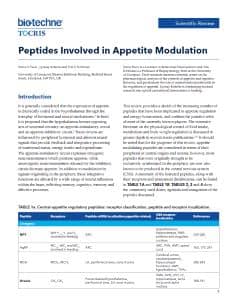
Our Peptides Involved in Appetite Modulation review gives an overview of the peptides implicated in appetite regulation and energy homeostasis.
Request copyRequest PDF