Epigenetics
Epigenetics can be defined as acquired changes in chromatin structure that arise independently of a change in the underlying DNA nucleotide sequence. Epigenetic modifications - including acetylation, methylation, phosphorylation, and ubiquitination amongst others - alter the accessibility of DNA to transcription machinery and therefore influence gene expression. Ongoing research is revealing the extent of the influence of epigenetics in disease states, and continues to provide a wealth of novel therapeutic targets.
Find out more about Epigenetic modification detection methods and machinery at our sister brand Novus Biologicals.
Epigenetics Target Files
Epigenetic mechanisms integrate environmental changes at the cellular level and enable cellular plasticity. As a result, they are involved in pathologies related to diet, lifestyle and environmental exposure to toxins, including cancer, inflammation and metabolic disorders. Proteins that carry out these epigenetic modifications can be thought of as being either "writers", "readers" or "erasers".
Epigenetic Writers »
Epigenetic writers catalyze the addition of chemical groups onto either histone tails or the DNA itself. These modifications are known as epigenetic marks. More Information »
Epigenetic Readers »
Epigenetic reader domains can be thought of as effector proteins that recognize and are recruited to specific epigenetic marks. "Writer" and "eraser" enzymes may also contain such reader domains, leading to the coordination of "read-write" or "read-erase" mechanisms. More Information »
Epigenetic Erasers »
Epigenetic marks are not necessarily permanent modifications; instead, they can be removed by a group of enzymes known as "erasers" in order to reverse the influence of a given epigenetic mark on gene expression. More Information »
Resources for Epigenetics Research
Blog Post: Developing Epigenetic Chemical Probes
Written by Dr Suzanne Ackloo, this blog details the development of chemical probes for epigenetic targets at the Structural Genomics Consortium (SGC). Dr Ackloo describes the mission of the SCG and how they go about achieving their goals, as well as describing notable successes of the project.
Read Now!
Blog Post: Application of Epigenetic Probes in Non-Oncology Research
Epigenetic chemical probes have well established uses in oncology research. This blog post, written by Dr Suzanne Ackloo from the SGC, summarizes the role of bromodomains and epigenetic enzymes in research outside the oncology field.
Read Now!
Literature for Epigenetics
Tocris offers the following scientific literature for Epigenetics to showcase our products. We invite you to request* your copy today!
*Please note that Tocris will only send literature to established scientific business / institute addresses.

Epigenetics in Cancer Research Product Guide
This product guide reviews some of the main areas in cancer epigenetics research and lists around 120 products that can be used for the main epigenetic targets including:
- Histone Methylation
- Histone Acetylation
- DNA Methylation
- Ubiquitination
- Bromodomains

Stem Cell Research Product Guide
This product guide provides a background to the use of small molecules in stem cell research and lists over 200 products for use in:
- Self-renewal and Maintenance
- Differentiation
- Reprogramming
- Organoid Generation
- GMP and Ancillary Material Grade Products

Epigenetics Scientific Review
Written by Susanne Müller-Knapp and Peter J. Brown, this review gives an overview of the development of chemical probes for epigenetic targets, as well as the impact of these tool compounds being made available to the scientific community. In addition, their biological effects are also discussed. Epigenetic compounds available from Tocris are listed.

Cell Cycle & DNA Damage Repair Poster
In normal cells, each stage of the cell cycle is tightly regulated, however in cancer cells many genes and proteins that are involved in the regulation of the cell cycle are mutated or over expressed. This poster summarizes the stages of the cell cycle and DNA repair. It also highlights strategies for enhancing replicative stress in cancer cells to force mitotic catastrophe and cell death.

Epigenetics in Cancer Poster
This poster summarizes the main epigenetic targets in cancer. The dysregulation of epigenetic modifications has been shown to result in oncogenesis and cancer progression. Unlike genetic mutations, epigenetic alterations are considered to be reversible and thus make promising therapeutic targets.

Rheumatoid Arthritis Poster
Rheumatoid arthritis (RA) is a chronic destructive inflammatory autoimmune disease that results from a breakdown in immune tolerance, for reasons that are as yet unknown. This poster summarizes the pathology of RA and the inflammatory processes involved, as well as describing some of the epigenetic modifications associated with the disease and the potential for targeting these changes in the discovery of new treatments.
Epigenetics: Molecular Machinery
| Epigenetic Mechanism | "Writer" Enzymes | "Reader" Domains | "Eraser" Enzymes |
|---|---|---|---|
| DNA Methylation | DNA Methyltransferases | Methyl-CpG Binding Domains | Active DNA Demethylation Enzymes; Passive DNA Demethylation |
| Histone Acetylation | Histone Acetyltransferases | Bromodomains; Tandem PHD Fingers; Pleckstrin Homology Domains | Histone Deacetylases |
| Histone Arginine Methylation | Protein Arginine Methyltransferases (PRMTs) | Tudor Domains (recognize symmetrically dimethylated arginines); WD40 Domains | Histone Demethylases (JMJD6); Peptidyl Arginine Deiminases (putative) |
| Histone Lysine Methylation | Histone Lysine Methyltransferases | Chromodomains; Tudor Domains; PHD Fingers; MBT Domains; ZF-CW Proteins; WD40 Domains; PWWP | Histone Lysine Demethylases |
| Histone Phosphorylation | Kinases (JAK2, ATM/ATR, PKC, PKA, Haspin, Aurora B Kinase, RSK2, AMPK, MSK, MEK) | Chromoshadow Domains (phosphoTyrosine); 14.3.3 Proteins (phosphoSerine); BIR Domains; BRCT Proteins | Protein Serine/Threonine Phosphatases; Protein Tyrosine Phosphatases |
| Histone Ubiquitination | Ubiquitin E2 Conjugases; Ubiquitin E3 Ligases | Unknown | Deubiquitinating Enzymes |
Acronyms
AMPK - Adenosine monophosphate-activated kinase; ATM - Ataxia telangiectasia mutated; ATR - Ataxia telangiectasia and RAD3 related; BIR - Baculovirus inhibitor of apoptosis protein repeat; BRCT - Breast cancer type 1 susceptibility protein C terminus; JAK2 - Janus kinase 2; JMJD6 - Jumonji domain-containing 6 protein; MBT - Malignant brain tumor; MEK - Mitogen-activated protein kinase kinase; MSK - Mitogen- and stress-activated kinase; PHD - Plant homeodomain; PKA - Protein kinase A; PKC - Protein kinase C; PWWP - Proline-Tryptophan-Tryptophan-Proline; RSK2 - Ribosomal S6 kinase C; ZF-CW - Zinc Finger CW
Our product guide reviews some of the main areas in cancer epigenetic research and highlights products that can be used for the main epigenetic targets.
Request copyRequest PDF
Our guide highlights the use of small molecules in stem cell research and cell therapy and lists relevant products.
Request copyRequest PDF
Our Epigenetics review gives an overview of the development of chemical probes for epigenetic targets, and discusses their biological effects.
Request copyRequest PDF
Our Cell Cycle & DNA Damage Repair poster summarizes the stages of the cell cycle and DNA repair. It also highlights strategies for enhancing replicative stress in cancer cells to force mitotic catastrophe and cell death.
Request copyDownload PDFTaken from the Cancer Product Guide Edition 3
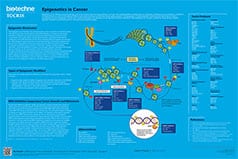
Our Epigenetics in Cancer poster summarizes the main epigenetic targets in cancer, and highlights chemical compounds for the inhibition of these targets.
Request copyDownload PDFWritten by Adam P. Cribbs et al.

Our Rheumatoid Arthritis poster summarizes the disease pathology and highlights some of the epigenetic modifications associated with the condition.
Request copyDownload PDF