Submit a Review & Earn an Amazon Gift Card
You can now submit reviews for your favorite Tocris products. Your review will help other researchers decide on the best products for their research. Why not submit a review today?!
Submit Review
PD 173074 is a selective FGFR1 and FGFR3 inhibitor (IC50 values are 5, 21.5, ~100, 17600 and 19800 nM for FGFR3, FGFR1, VEGFR2, PDGFR and c-Src respectively, and > 50000 nM for EGFR, InsR, MEK and PKC). Inhibits VEGF- and FGF-induced angiogenesis in the mouse cornea model of angiogenesis. Inhibits proliferation and differentiation of oligodendrocyte progenitors. Also promotes mESC self-renewal, facilitates the conversion of mouse epiblast stem cells to an earlier pluripotency state and inhibits differentiation of miPSCs to cardiomyocytes. Suppresses cell proliferation in cell lines expressing mutated FGFR3 protein. Blocks tumor growth in H510 and H69 SCLC xenograft models.
Sold for research purposes under agreement from Pfizer Inc.
PD 173074 is also offered as part of the Tocriscreen 2.0 Max, Tocriscreen Kinase Inhibitor Library and Tocriscreen Stem Cell Library. Find out more about compound libraries available from Tocris.
| M. Wt | 523.67 |
| Formula | C28H41N7O3 |
| Storage | Store at +4°C |
| Purity | ≥98% (HPLC) |
| CAS Number | 219580-11-7 |
| PubChem ID | 1401 |
| InChI Key | DXCUKNQANPLTEJ-UHFFFAOYSA-N |
| Smiles | O=C(NC(C)(C)C)NC2=NC1=NC(NCCCCN(CC)CC)=NC=C1C=C2C3=CC(OC)=CC(OC)=C3 |
The technical data provided above is for guidance only. For batch specific data refer to the Certificate of Analysis.
Tocris products are intended for laboratory research use only, unless stated otherwise.
| Solvent | Max Conc. mg/mL | Max Conc. mM | |
|---|---|---|---|
| Solubility | |||
| DMSO | 52.37 | 100 | |
| ethanol | 52.37 | 100 |
The following data is based on the product molecular weight 523.67. Batch specific molecular weights may vary from batch to batch due to the degree of hydration, which will affect the solvent volumes required to prepare stock solutions.
| Concentration / Solvent Volume / Mass | 1 mg | 5 mg | 10 mg |
|---|---|---|---|
| 1 mM | 1.91 mL | 9.55 mL | 19.1 mL |
| 5 mM | 0.38 mL | 1.91 mL | 3.82 mL |
| 10 mM | 0.19 mL | 0.95 mL | 1.91 mL |
| 50 mM | 0.04 mL | 0.19 mL | 0.38 mL |
References are publications that support the biological activity of the product.
Bansal et al (2003) Specific inhibitor of FGF receptor signaling: FGF-2-mediated effects on proliferation, differentiation, and MAPK activation are inhibited by PD173074 in oligodendrocyte-lineage cells. J.Neurosci.Res. 74 486 PMID: 14598292
Miyake et al (2010) 1-tert-butyl-3-[6-(3,5-dimethoxy-phenyl)-2-(4-diethylamino-butylamino)-pyrido[2,3-d]pyrimidin-7-yl]-urea (PD173074), a selective tyrosine kinase inhibitor of fibroblast growth factor receptor-3 (FGFR3), inhibits cell proliferation of bla J.Pharmacol.Exp.Ther. 332 795 PMID: 19955487
Trudel et al (2004) Inhibition of fibroblast growth factor receptor 3 induces differentiation and apoptosis in t(4;14) myeloma. Neoplasia 103 3521 PMID: 14715624
Pardo et al (2010) The fibroblast growth factor receptor inhibitor PD173074 blocks small cell lung cancer growth in vitro and in vivo. Cancer Res. 69 8645 PMID: 19903855
Zhou et al (2010) Conversion of mouse epiblast stem cells to an earlier pluripotency state by small molecules. J.Biol.Chem. 285 29676 PMID: 20705612
Buehr et al (2008) Capture of authentic embryonic stem cells from rat blastocysts. Cell 135 1287 PMID: 19109897
Chan et al (2010) PLoS One 5 e14414
If you know of a relevant reference for PD 173074, please let us know.
Keywords: PD 173074, PD 173074 supplier, Selective, FGFR1, FGFR3, inhibitors, inhibits, fibroblast, growth, factors, PD173074, stem, cells, Pfizer, FGFR, Stem, Cell, Proliferation, Neural, Cells, 3044, Tocris Bioscience
Citations are publications that use Tocris products. Selected citations for PD 173074 include:
Wilson et al (2012) Widespread potential for growth-factor-driven resistance to anticancer kinase inhibitors. Nature 487 505 PMID: 22763448
Borroto-Escuela et al (2012) The existence of FGFR1-5-HT1A receptor heterocomplexes in midbrain 5-HT neurons of the rat: relevance for neuroplasticity. J Neurosci 32 6295 PMID: 22553035
Shifley et al (2012) Prolonged FGF signaling is necessary for lung and liver induction in Xenopus. BMC Dev Biol 12 27 PMID: 22988910
Gibson et al (2012) Activation of glial FGFRs is essential in glial migration, proliferation, and survival and in glia-neuron signaling during olfactory system development. PLoS One 7 e33828 PMID: 22493675
Lichtenberger et al (2016) Epidermal β-catenin activation remodels the dermis via paracrine signalling to distinct fibroblast lineages. Nat Commun 7 10537 PMID: 26837596
Nacu et al (2016) FGF8 and SHH substitute for anterior-posterior tissue interactions to induce limb regeneration. Nature 533 407 PMID: 27120163
Cho et al (2012) Conversion from mouse embryonic to extra-embryonic endoderm stem cells reveals distinct differentiation capacities of pluripotent stem cell states. J Biol Chem 139 2866 PMID: 22791892
Rankin et al (2012) Suppression of Bmp4 signaling by the zinc-finger repressors Osr1 and Osr2 is required for Wnt/β-catenin-mediated lung specification in Xenopus. Cell Mol Life Sci 139 3010 PMID: 22791896
Rodríguez et al (2012) Modulation of pluripotency in the porcine embryo and iPS cells. Acta Pharm Sin B 7 e49079 PMID: 23145076
Benzina et al (2015) A kinome-targeted RNAi-based screen links FGF signaling to H2AX phosphorylation in response to radiation. Stem Cells Int 72 3559 PMID: 25894690
Yang et al (2015) Inhibition of G9a Histone Methyltransferase Converts Bone Marrow Mesenchymal Stem Cells to Cardiac Competent Progenitors. Dev Dyn 2015 270428 PMID: 26089912
Rankin et al (2015) A Molecular atlas of Xenopus respiratory system development. PLoS One 244 69 PMID: 25156440
Knuchel et al (2015) Fibroblast surface-associated FGF-2 promotes contact-dependent colorectal cancer cell migration and invasion through FGFR-SRC signaling and integrin αvβ5-mediated adhesion. Development 6 14300 PMID: 25973543
Witty et al (2014) Generation of the epicardial lineage from human pluripotent stem cells. Nat Biotechnol 32 1026 PMID: 25240927
Bise et al (2019) Ciliary neurotrophic factor stimulates cardioprotection and the proliferative activity in the adult zebrafish heart. NPJ Regen Med 4 2 PMID: 30701084
Takata et al (2017) Self-patterning of rostral-caudal neuroectoderm requires dual role of Fgf signaling for localized Wnt antagonism. Nat Commun 8 1339 PMID: 29109536
MacKenzie et al (2015) Increased FGF1-FGFRc expression in idiopathic pulmonary fibrosis. Respir Res 16 83 PMID: 26138239
Saito et al (2015) The role of HGF/MET and FGF/FGFR in fibroblast-derived growth stimulation and lapatinib-resistance of esophageal squamous cell carcinoma. BMC Cancer 15 82 PMID: 25884729
Anreddy et al (2014) PD173074, a selective FGFR inhibitor, reverses MRP7 (ABCC10)-mediated MDR. Development 4 202 PMID: 26579384
Yuan et al (2019) IFT80 is required for stem cell proliferation, differentiation, and odontoblast polarization during tooth development. Cell Death Dis 10 63 PMID: 30683845
Do you know of a great paper that uses PD 173074 from Tocris? Please let us know.
Average Rating: 5 (Based on 1 Review.)
$25/€18/£15/$25CAN/¥75 Yuan/¥2500 Yen for a review with an image
$10/€7/£6/$10 CAD/¥70 Yuan/¥1110 Yen for a review without an image
Filter by:
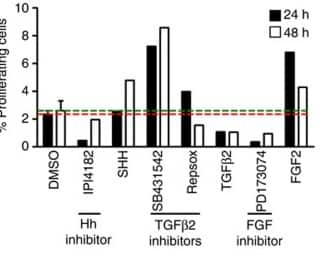
Mice received a dose of 25 mg per kg body weight PD173074 dissolved in acetone or vehicle only topically onto the back skin.
Mouse primary fibroblasts also treat with PD173074 2 μM, vehicle: DMSO.
Tocris offers the following scientific literature in this area to showcase our products. We invite you to request* your copy today!
*Please note that Tocris will only send literature to established scientific business / institute addresses.

This product guide provides a background to the use of small molecules in stem cell research and lists over 200 products for use in:
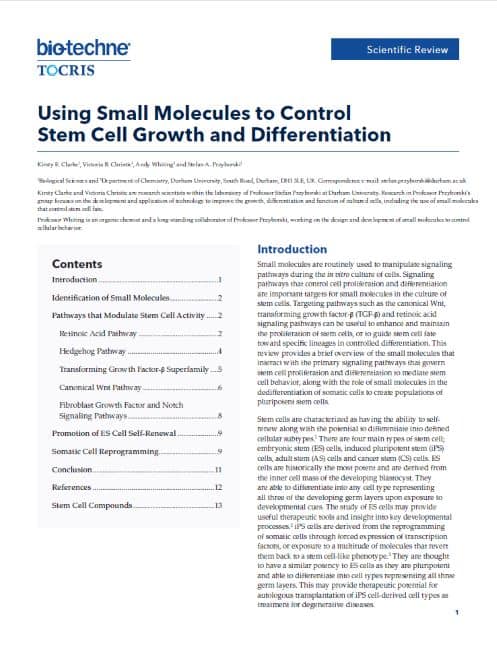
Written by Kirsty E. Clarke, Victoria B. Christie, Andy Whiting and Stefan A. Przyborski, this review provides an overview of the use of small molecules in the control of stem cell growth and differentiation. Key signaling pathways are highlighted, and the regulation of ES cell self-renewal and somatic cell reprogramming is discussed. Compounds available from Tocris are listed.

This poster summarizes the pathogenesis of angiogenesis in cancer, as well as some of the main angiogenesis therapeutic targets.

Major depressive disorder is characterized by depressed mood and a loss of interest and/or pleasure. Updated in 2015 this poster highlights presynaptic and postsynaptic targets for the potential treatment of major depressive disorder, as well as outlining the pharmacology of currently approved antidepressant drugs.

Written by Rebecca Quelch and Stefan Przyborski from Durham University (UK), this poster describes the isolation of pluripotent stem cells, their maintenance in culture, differentiation, and the generation and potential uses of organoids.

Our GMP stem cell compounds are suitable for use as ancillary reagents (raw materials) for the further manufacturing of stem cell therapies.
Learn More
Our guide highlights the use of small molecules in stem cell research and cell therapy and lists relevant products.
Request copyRequest PDF
Our Stem Cells review gives an overview of the use of small molecules in the control of stem cell growth & differentiation and somatic cell reprogramming.
Request copyRequest PDF
Our Angiogenesis in Cancer poster summarizes the pathogenesis of angiogenesis in cancer, as well as some of the main angiogenesis therapeutic targets.
Request copyDownload PDF
Our Depression poster highlights presynaptic and postsynaptic targets for the potential treatment of major depressive disorder.
Request copyDownload PDF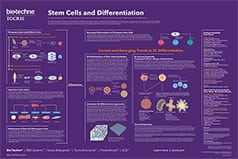
Written by Rebecca Quelch and Stefan Przyborski, this poster summarizes the isolation of pluripotent stem cells, their maintenance in culture, differentiation, and potential uses.
Download PDF
You can now submit reviews for your favorite Tocris products. Your review will help other researchers decide on the best products for their research. Why not submit a review today?!
Submit Review