Heat Shock Proteins
Heat Shock Proteins (Hsps) are a specific group of chaperone proteins whose expression is increased upon exposure to elevated temperatures or stress.
Hsps exist in all organisms and are highly conserved. They are also commonly known as 'stress proteins' and are divided into several families according to their molecular weights.
- 60kDa heat shock protein (Hsp60, chaperonin)
- 70kDa heat shock protein (Hsp70)
- 90kDa heat shock protein (Hsp90)
- 100kDa heat shock protein (Hsp100)
Unlike other proteins Hsps do not denature under conditions of stress as they have better hydrophobic packing, enhanced secondary protein structure, stronger hydrogen bonds and helix dipole stabilization. Instead, Hsps act to protect other cellular proteins from thermal or oxidative stress, which can cause protein unfolding, conformational changes in the protein structure and aggregation, potentially leading to a variety of pathologies. To do this, Hsps act as 'molecular chaperones' and are able to stabilize and assist in the folding of substrate proteins to the native state. Some Hsps also direct denatured proteins to the proteasome for their proteolytic destruction during the heat shock response.
Literature for Heat Shock Proteins
Tocris offers the following scientific literature for Heat Shock Proteins to showcase our products. We invite you to request* your copy today!
*Please note that Tocris will only send literature to established scientific business / institute addresses.

Cell Cycle and DNA Damage Research Product Guide
This product guide provides a review of the cell cycle and DNA damage research area and lists over 150 products, including research tools for:
- Cell Cycle and Mitosis
- DNA Damage Repair
- Targeted Protein Degradation
- Ubiquitin Proteasome Pathway
- Chemotherapy Targets
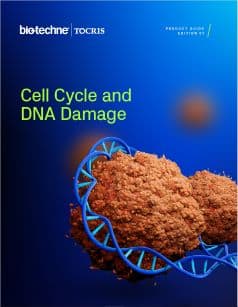
Our Cell Cycle and DNA Damage Research Guide highlights over 750 products for cell cycle and DNA damage research.
Request copyRequest PDF